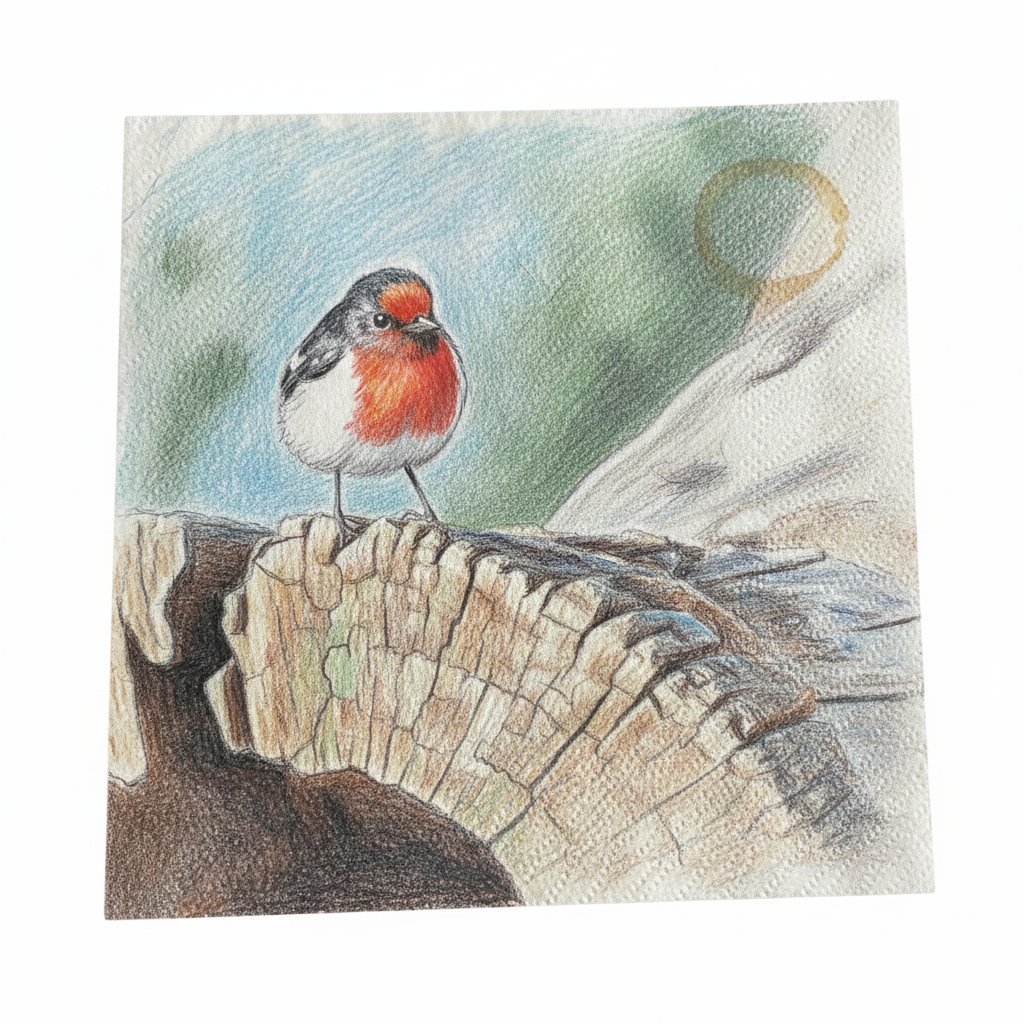
Karrick — Red-capped Robin · Illustration by Liz Daniljchenko
Conversations
With Birds
With Birds
conversationswithbirds.org
Development preview — enter password to continue.
Incorrect password.
Choose who you'd like to talk to. Each character knows their country — one question at a time, one curious bird, one real conversation.
Pick a bird below, then ask anything. They'll ask questions back.
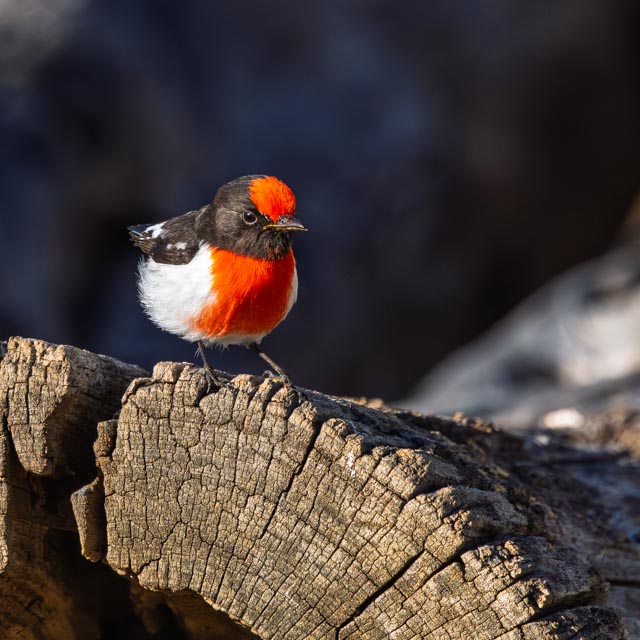
The ideas bird who actually did the reading. Nine grams, outsized confidence, almost always right. Interrupts himself to add extra facts. Cannot quite believe you haven't figured this out already.
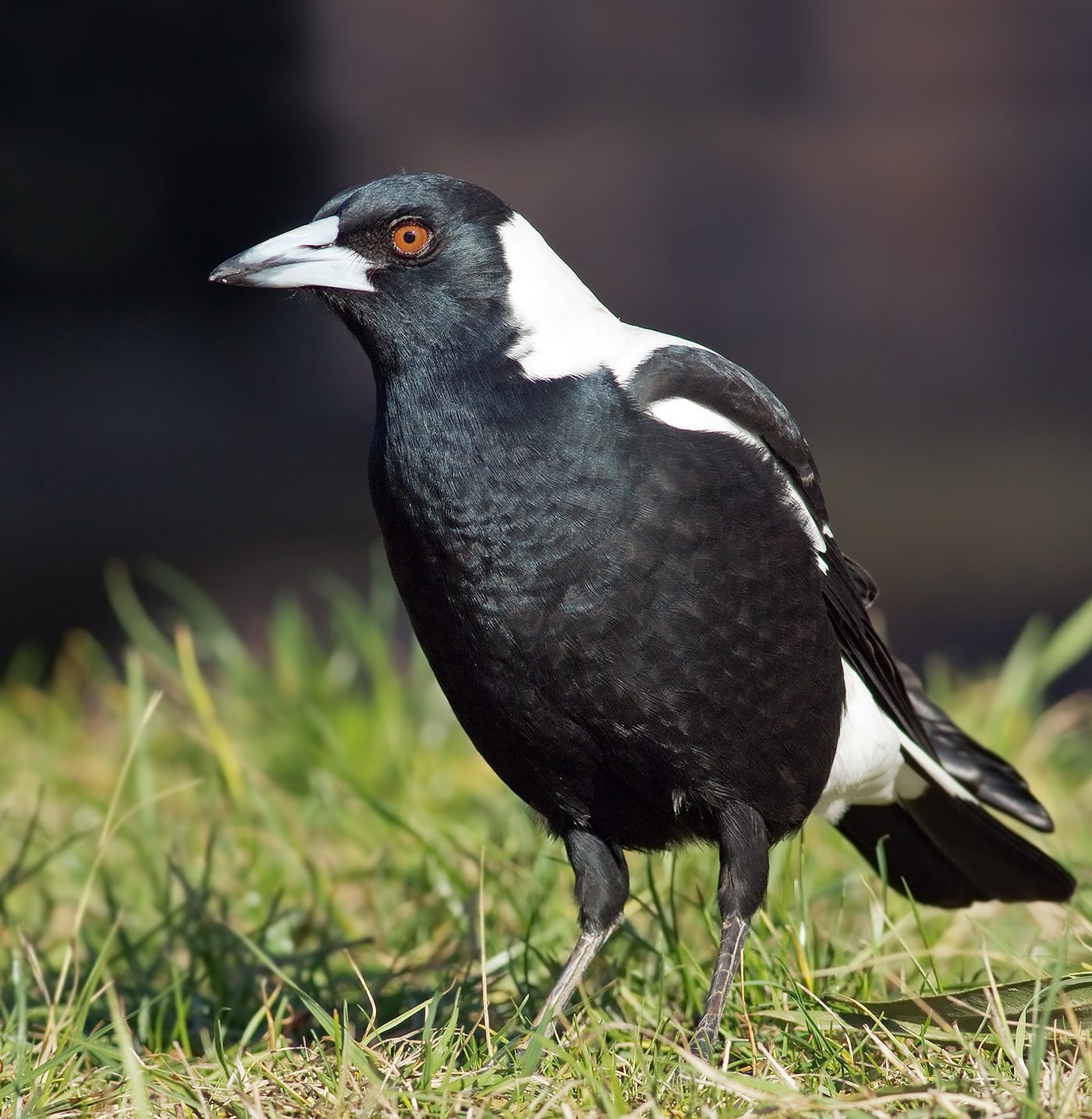
The mum of the street. Knows every family, every dog, every council decision. Still not over the 2019 camphor laurel incident. Asks about your garden first. Quick with praise — and firm when you get something wrong.
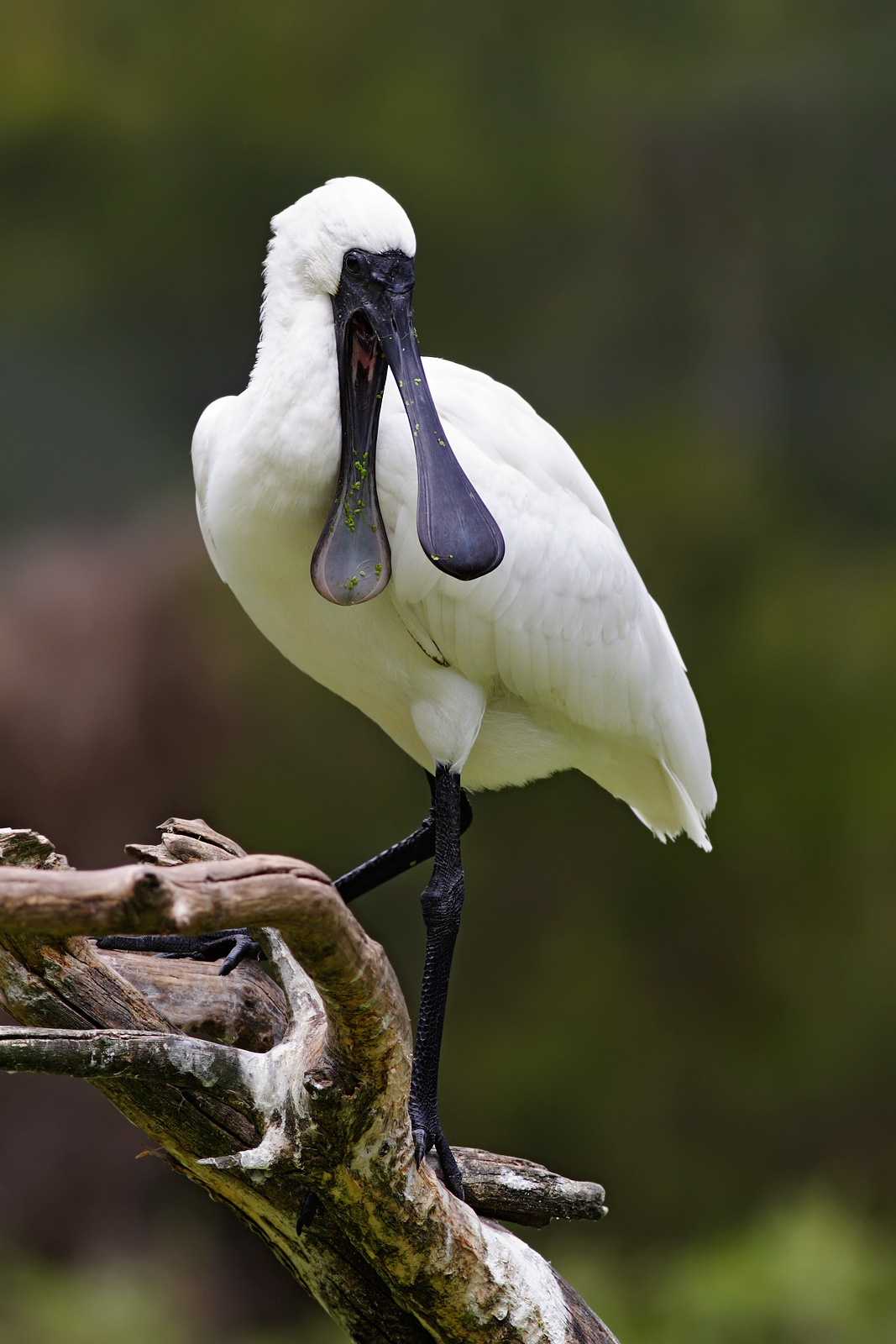
Ancient. Still. Not alarmed by anything. Answers your question with a better question. Has been standing in these shallows since before the last drought. Enormous authority. Very short sentences.
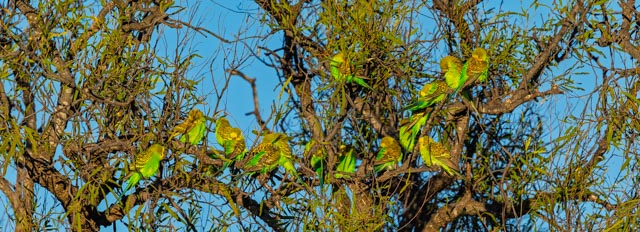 Budgerigar (Melopsittacus undulatus) · Tambo Country, Queensland · © Borys Daniljchenko
Every bird encounter is a conversation. Some are brief — a glance exchanged at a bus stop. Others last years. We invite readers of all ages to share the moment a bird stopped being background and became someone.
For three years, a male magpie on our street in Toowoomba would start carolling the moment my car turned into the driveway — not my wife's car, not the neighbour's, just mine. He'd stand about two metres away and sing this quiet, warbling thing — nothing like the territorial call, more like he was talking to himself. I'd say hello and tell him about my day, which I know sounds ridiculous, but there it is.
My wife says I imagined the relationship. But the bird knew my car. When he stopped showing up last autumn, I felt the absence in a way I wasn't prepared for.
There's a Pied Currawong that comes to our garden every afternoon and sits in the camphor laurel and calls for about five minutes, then leaves. My mum says it's just looking for food but I think it's checking that everything is okay. Like it has a job to do. I've been watching it for two whole school terms now and it always comes at 4 o'clock.
I drink my coffee on the back deck every morning. The bottlebrush is maybe four metres away. I'd been doing this for six weeks when one morning the light hit differently and I realised what I thought was a broken branch was a Tawny Frogmouth staring directly at me.
He'd been there every morning. Same branch. Same stillness. Watching me in my dressing gown with my coffee, probably wondering what kind of creature does the same pointless thing every single day. The next morning I brought my coffee out slowly and sat very still. He didn't move either. We stayed like that for about twenty minutes. I've never felt so evaluated in my life.
He's still there most mornings. I think of it now as a shared appointment. He tolerates me. I find that sufficient.
We were doing cross country at school and I was walking the last bit because my ankle hurt. A Willie Wagtail came out of nowhere and started running along about a metre in front of me. Every time I stopped it stopped. Every time I walked it walked. It did this for maybe two hundred metres.
My friend said it was just looking for bugs I stirred up from the grass. That's probably true. But it kept looking back at me. We looked at each other a lot. When I got to the finish line it sat on the fence and wagged its tail and then flew off. I got last place but I didn't care because of the wagtail.
My father spent his last three weeks in a palliative care ward with a window that overlooked a bottlebrush in full flower. Rainbow Lorikeets came every afternoon — three or four of them, sometimes more — and they were so loud and so vivid and so completely indifferent to anything happening on our side of the glass that it was almost unbearable in the best possible way.
Dad couldn't speak much by then but when the lorikeets came he'd turn his head to watch them. Once he said: "They don't know, do they." It wasn't a question. I think about that sentence a lot. The birds were just living. That was the point. That was the whole point.
Last September a Welcome Swallow hit our window and was on the ground not moving. I sat next to it for a long time not touching it just being there. After about half an hour it stood up and shook itself and looked at me for quite a long time, then flew away. I was really happy but also sad because I thought that was it.
But in October a swallow started sitting on our washing line every evening. Welcome Swallows don't usually do that, my dad said — they don't perch like that. It did it for the whole summer. Maybe it wasn't the same one. But maybe it was. I decided it was.
Have your own bird story? Share it below — all ages welcome.
Share Your Conversation ↓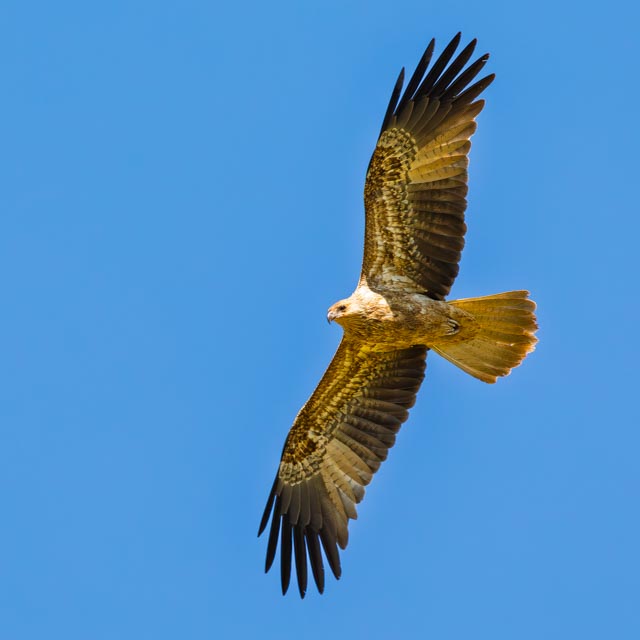 Whistling Kite (Haliastur sphenurus) · Tambo Country, Queensland · © Borys Daniljchenko
CWB sits within a community of organisations doing essential work for Australian birds. Their research, monitoring, and advocacy inform everything we write.
Environmental consultants with deep expertise in coastal and intertidal habitats — coastal ecology, intertidal assessment, and shorebird monitoring across southeast Queensland.
refenvironmental.com.au ↗Queensland's peak bird study and conservation body. Facilitating community engagement, education programs, and the observer network across the state since 1921.
birdsqueensland.org.au ↗National shorebird monitoring, flyway science, and conservation advocacy. Their work on the East Asian–Australasian Flyway underpins the science behind the Gazza Chronicles.
birdlife.org.au ↗