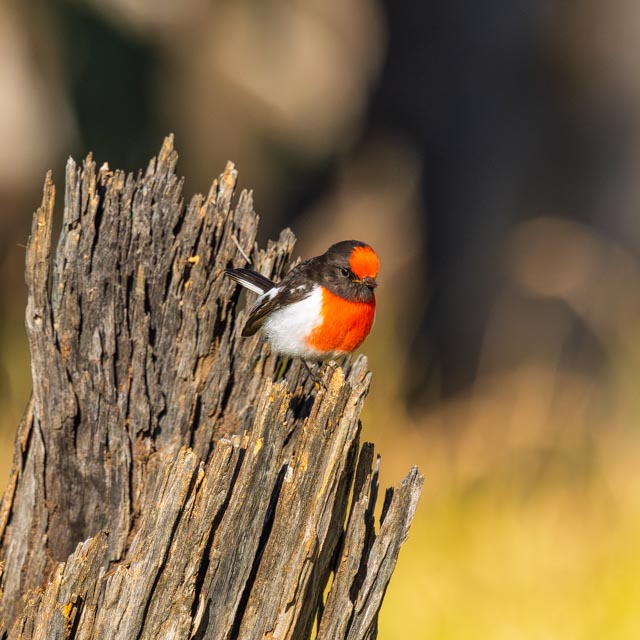
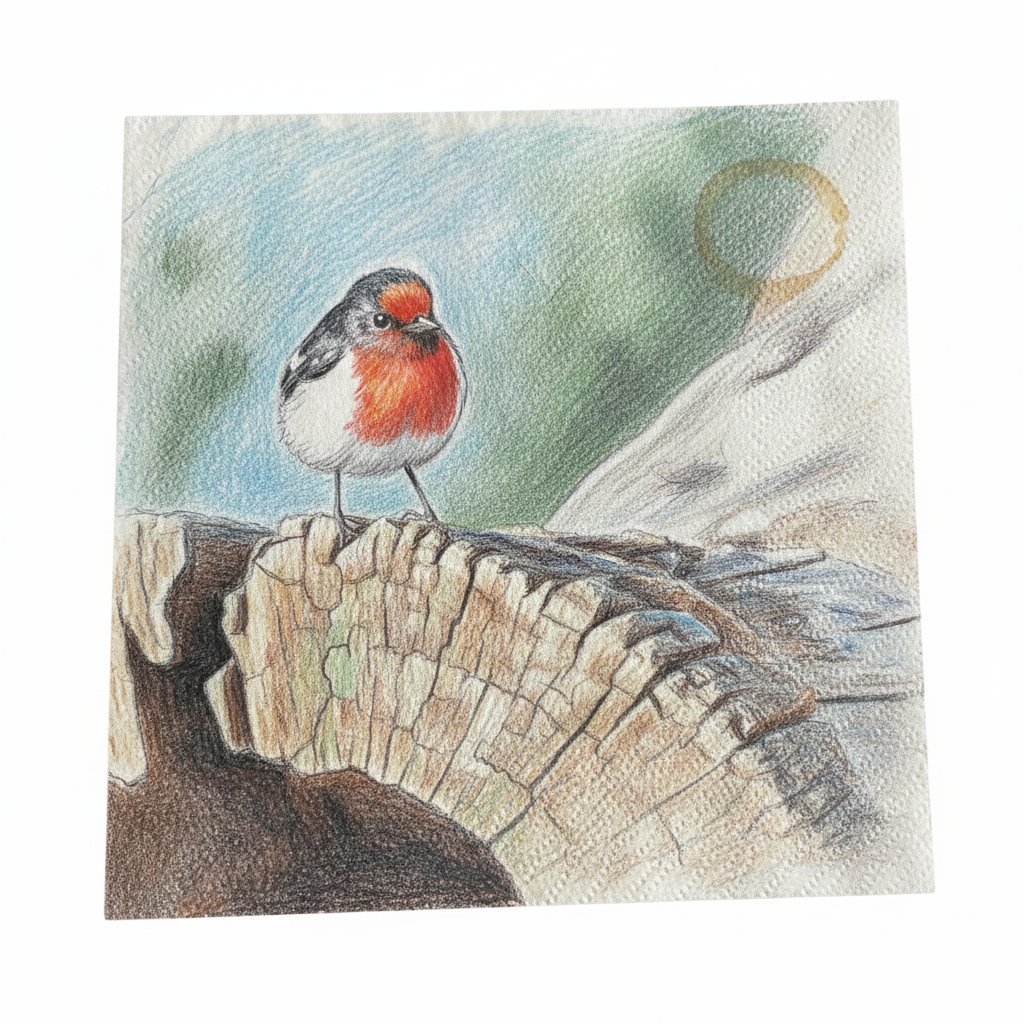
Karrick — Red-capped Robin, Tambo Country
Karrick — Red-capped Robin, Tambo Country · Illustration by Liz Daniljchenko
Conversations
With Birds
conversationswithbirds.org
This site is in its development stage.
Enter your password to continue.
Incorrect password.
🚧 Site in Development — content and features are being added progressively. · Notify me when ready
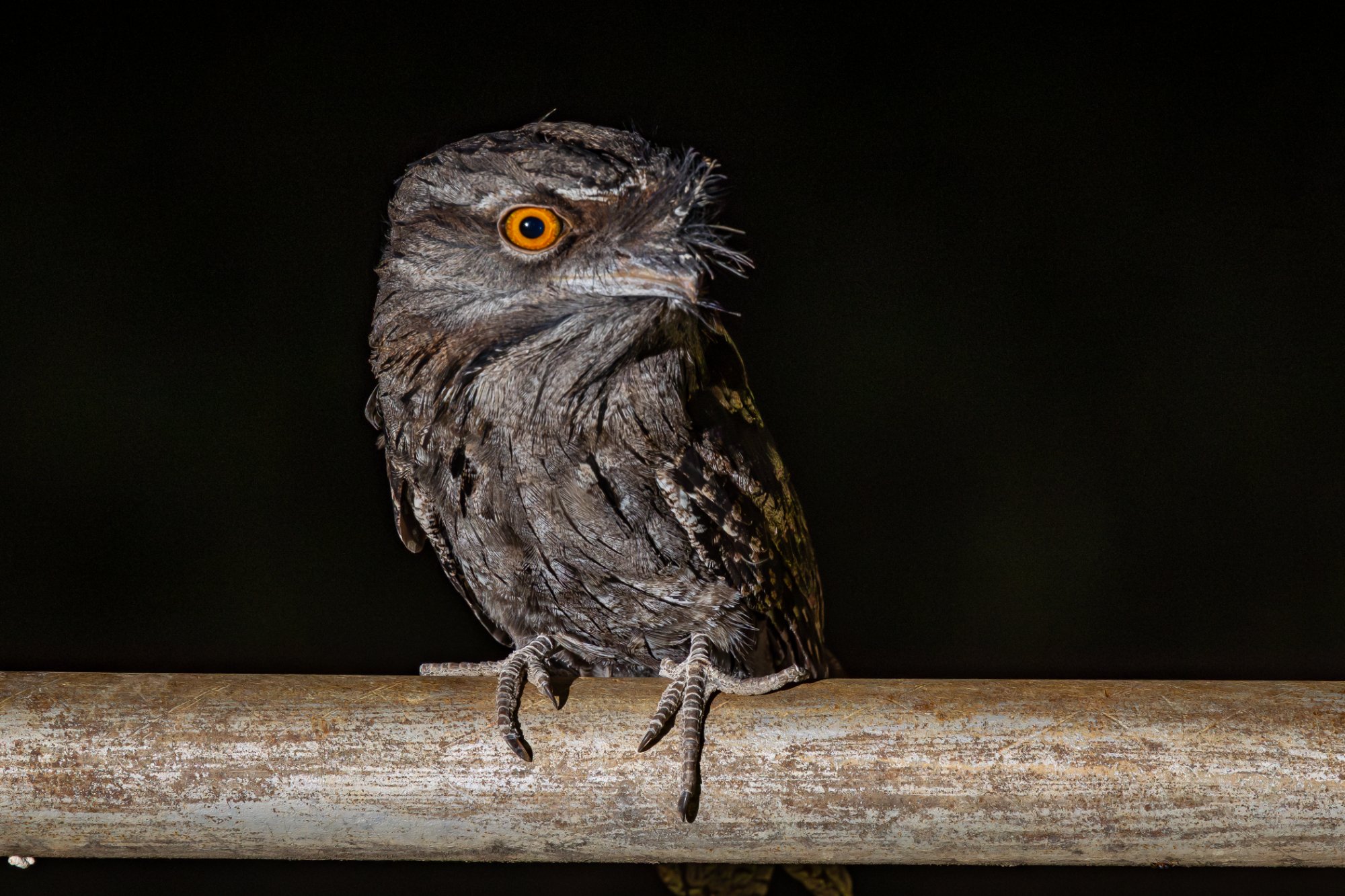
Tawny Frogmouth, Tambo Country, Queensland
Tawny Frogmouth (Podargus strigoides) · Tambo Country, Queensland
© Borys Daniljchenko
Borys Daniljchenko · Environmental Educator · Quandamooka Country

Listen Closely Enough,
and Every Bird Becomes
a Neighbour

Scientifically grounded, emotionally true stories about real Australian birds in real places. Stories that make conservation personal — one bird, one reader, one relationship at a time.

900+
Australian bird species
11,000 km
godwit's non-stop flight
25,000+
years, Quandamooka Country
What We Do

A Different Kind of Bird Story

Most nature books tell you about birds. Ours let the birds tell their own story — grounded in field science, told from the bird's perspective.

📖

Stories for Every Reader

Each title comes in two versions: a children's read-aloud edition with birdcalls and adventure, and an adult edition with ecological depth. Same bird, same story, two ways in.

🔬

Scientifically Grounded

Every behaviour described is real. Every habitat detail is accurate. Technical terms in the adult editions come with clear definitions and references to published research.

🎙️

Built to Be Read Aloud

The children's editions are full of birdcalls, animal sounds, and voice prompts that turn reading into performance. Designed for the space between grandparent and child.

🌏

Conservation Through Kinship

When you know a bird's name, its struggles, and the sound of its morning song, it stops being a statistic and starts being a neighbour. That's the shift that makes conservation personal.

Talk to the Birds

Karrick the Bush Bird, Maggie the Backyard Magpie, and the Royal Spoonbill — three AI characters who know their country, ask questions, and love a curious visitor.

💬

Your Stories, Too

The best bird stories don't all come from books. Share your own encounters — the magpie that recognised your car, the moment a bird stopped being background and became someone.

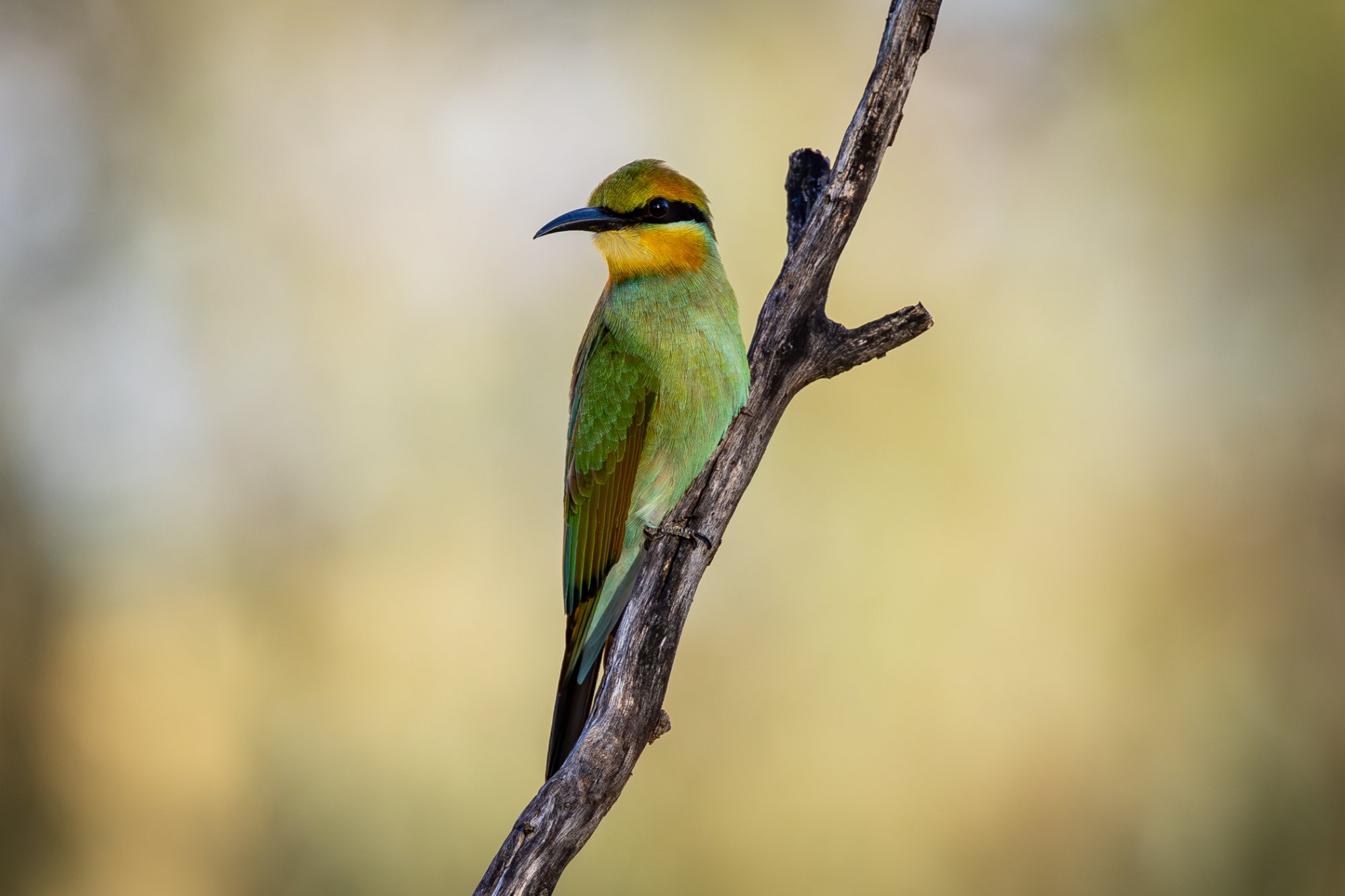
Rainbow Bee-eater, Tambo Country, Queensland Rainbow Bee-eater (Merops ornatus) · Tambo Country, Queensland · © Borys Daniljchenko
The Case for Birds

Why It Matters

Nature Is Not a Backdrop. It Is a Developmental Necessity.

Decades of research into child development tell us something consistent: children who form an emotional bond with the natural world develop stronger empathy, greater emotional resilience, a longer attention span, and a habit that will serve them for life — the habit of attending closely to something outside themselves.

When researcher David Sobel asked committed environmentalists what had shaped them, two answers came back again and again: many hours in a keenly remembered wild or semi-wild place in childhood, and an adult who taught respect for nature. A place and a person. That's what works.

A well-told bird story, read aloud at bedtime, provides both. The story creates the place — Karrik's gidgee woodland at dawn, Gazza's mudflat at high tide — rendered in enough sensory detail that a child doesn't just hear about it but inhabits it. And the adult reading is right there, sharing it.

Wonder comes before knowledge, not after it. That is why these stories exist in two versions. The children's edition is not a simplified adult book. It is a carefully constructed invitation into a relationship with a bird.
"It is more important to pave the way for the child to want to know than to put him on a diet of facts he is not ready to assimilate." — Rachel Carson, The Sense of Wonder, 1965
"What's important is that children have an opportunity to bond with the natural world, to learn to love it, before being asked to heal its wounds." — David Sobel, Beyond Ecophobia, 1996
"We will not fight to save something we do not love." — Molly O'Shaughnessy, The NAMTA Journal, 2013

The Relationship We Have Forgotten

The human nervous system did not evolve in an apartment. It evolved over hundreds of thousands of years in the company of other living things — other animals, other sounds, other kinds of attention. The relationship between humans and the natural world is not a preference. It is a biological expectation.

When that expectation goes unmet, something specific happens to wellbeing. In 2022, researchers at King's College London measured the effect of seeing or hearing birds on mental health using real-time smartphone data from 1,292 observations. The improvement in mood and reduction in anxiety was measurable, statistically significant, and lasted up to eight hours after the encounter — equally strong in people with and without existing mental health conditions.

The purpose of Conversations With Birds is not ultimately about birds. It is about restoring, or initiating, or deepening a relationship that the human nervous system has been expecting all along.

"We need the other animals. We need their otherness, their capacity to recall us, briefly but crucially, from the human world." — Paul Shepard, The Others, 1996
"The extinction of experience — the loss of everyday contact with nature — leads to apathy about the things we have no relationship with." — Robert Pyle, The Thunder Tree, 1993
"Seeing or hearing birds was associated with time-lagged improvements in mental wellbeing that were not explained by other factors." — King's College London / Urban Mind Study, 2022

What the Research Shows

The evidence base for nature connection as a component of human wellbeing has grown substantially in the past two decades. The following studies represent some of the stronger threads:

King's College London · 2022

Birds and Mental Wellbeing — Urban Mind Study

Seeing or hearing birds associated with reduced anxiety and improved mood — effect lasting up to 8 hours, present in people with and without existing mental health conditions. Scientific Reports, Hammoud et al.

University of Exeter · 2017

Neighbourhood Bird Diversity and Wellbeing

People living in neighbourhoods with more birds, shrubs, and trees were significantly less likely to suffer from depression, anxiety, and stress. BioScience, Cox et al.

Kellert & Wilson · 1993

The Biophilia Hypothesis

E.O. Wilson's foundational argument that the human attraction to other living things is not cultural but biological — an adaptive tendency with deep evolutionary roots.

Sobel · 1996 / 2008

Beyond Ecophobia — Place-Based Education

Children who develop place attachment before age 10 are significantly more likely to become adult environmental advocates. The mechanism is emotional, not informational.

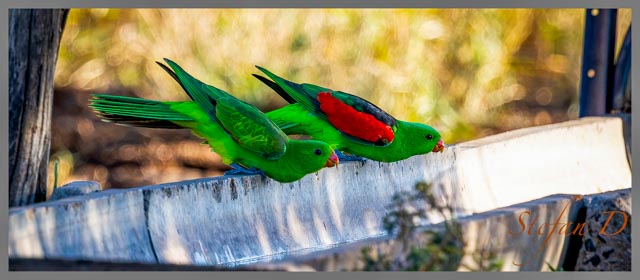
Red-winged Parrots, Tambo Country, Queensland Red-winged Parrot (Aprosmictus erythropterus) · Tambo Country, Queensland · © Borys Daniljchenko
Updated Daily
Conservation News

Around the World of Birds

Field reports, research notes, and a live camera — a fresh mix of one camera, one world story, and two field stories every 24 hours.

Watch Right Now

Live Nest & Wildlife Cameras

Direct feeds from independent camera projects — all streamed on the source site, not through YouTube.

There is a particular quality of attention that comes from watching a nest camera. You are not watching a wildlife documentary — no narrator, no music, no edited highlights. You are watching a life in real time, with all the waiting that entails. The falcon sits. The osprey watches the water. An hour passes. Then something happens — a small adjustment of posture, a brief exchange between birds that means everything to them — and you realise you have been holding your breath.

What you learn is not information, exactly. It is fluency. You begin to read the body language — the way a Peregrine signals alarm before you can see what alarmed it; the angle of an Osprey’s head that tells you a fish has been spotted forty metres below; the difference between a chick that is hungry and a chick that is simply making noise because that is what chicks do. This does not come from a field guide. It comes from watching the same birds in the same place until their behaviour starts to make sense as behaviour — purposeful, intelligent, entirely on their own terms.

And then there is the feeling that is hard to name. Relief, perhaps — that these birds are still here, still doing this, in the middle of cities and airports and human noise. An unexpected companionship with something that doesn’t know you exist and doesn’t need to. The osprey on its barge has no idea anyone is watching. It is simply living. That indifference is, paradoxically, what makes it worth watching.

🦅
UK · Yorkshire · Live 24/7

Robert E. Fuller — Barn Owls, Kestrels & Tawny Owls

Wildlife artist Robert Fuller streams multi-camera feeds from hidden nest boxes on his Yorkshire property — named individual birds, years of backstory, kestrel–barn owl territorial drama. Stream stays on his site. Funded by donations. No YouTube.

robertefuller.com/nest-cams ↗
🦅
USA · Pittsburgh PA · Live Year-Round

PixCams — Bald Eagle Nest & Songbird Feeders

An urban Bald Eagle pair nesting 5 km from downtown Pittsburgh, live since 2013. Pennsylvania Game Commission educational permit. Multiple bird feeder cameras also on site. Streams directly at pixcams.com — no YouTube.

pixcams.com ↗
🦉
Scotland · Loch Doon · Seasonal Apr–Aug

Loch Doon Osprey Cam — Angel & Frankie

Angel and Frankie have returned to this Ayrshire loch every spring since 2013. Their chick was photographed in Senegal the following winter. East Ayrshire Leisure installed direct streaming hardware in 2025. No YouTube.

eastayrshireleisure.com/osprey-cam ↗
🦅
UK · Poole Harbour · Seasonal Apr–Aug

Birds of Poole Harbour — Ospreys Return

White-tailed Ospreys bred here for the first time in 200 years in 2022 — the result of a decade-long reintroduction project. Named pairs, GPS-tracked, nest webcam streamed directly on the project’s own page. No YouTube.

birdsofpooleharbour.co.uk ↗

All cameras are independent projects streaming directly from the source. Links open in a new tab.

The Know-All of the Bush

Meet Karrick

Karrick — Red-capped Robin, Tambo Country, illustration by Liz Daniljchenko
Illustration by Liz Daniljchenko
Red-capped Robin · Petroica goodenovii

Nine grams of curiosity in a fire-engine-red waistcoat.

Mitchell grass downs, south of Tambo, western Queensland
"From up here on this dead branch, I've been watching you approach for five minutes. I know where the snake is. I know what the kookaburra had for breakfast. What do you want to know?"

Karrick is the CWB AI guide — the bush bird who knows everything, asks questions back, and finds the world endlessly surprising. His knowledge covers every Australian bird from woodland robins to ocean albatrosses. He's like Tim Low at twelve: ferociously curious, not yet tired of being amazed.

🐦 Bush bird 🌿 All Australian birds 💬 Asks questions back ✦ Ends with a Karrickism
Talk to Karrick → Meet Maggie & the Spoonbill
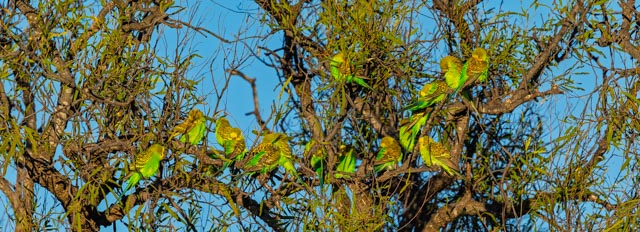
Budgerigar flock, Tambo Country, Queensland Budgerigar (Melopsittacus undulatus) · Tambo Country, Queensland · © Borys Daniljchenko
From the Collection

Three Birds. Three Worlds.

Each story is a complete life — one bird, one week, one landscape. Told in two voices: a child's read-aloud and an adult's field journal.

Red-capped Robin — Karrick's country, Tambo Queensland Free Chapter
Conversations With Robins

Karrik's Twilight

A nine-gram bird with the biggest voice in the woodland. Three eggs, a rival male, a snake in the night, and a week that decides everything.

Read Free Chapter
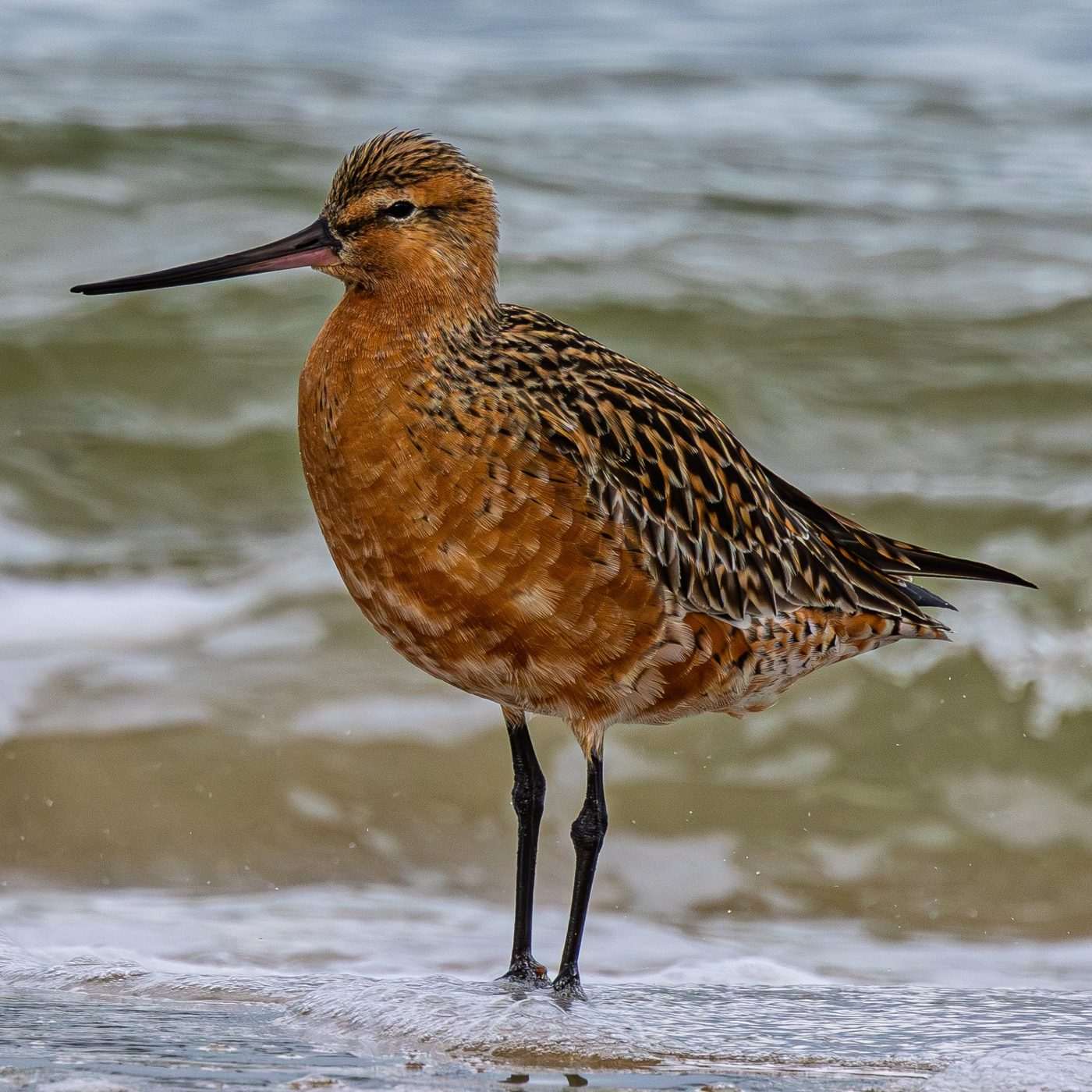
Bar-tailed Godwit at the waterline New
Conversations With Shorebirds

Gazza's Big Flight

11,000 km, nine days, no stops. What a Bar-tailed Godwit thinks about at 4am over the open Pacific, running on nothing but fat and nerve.

Available Soon
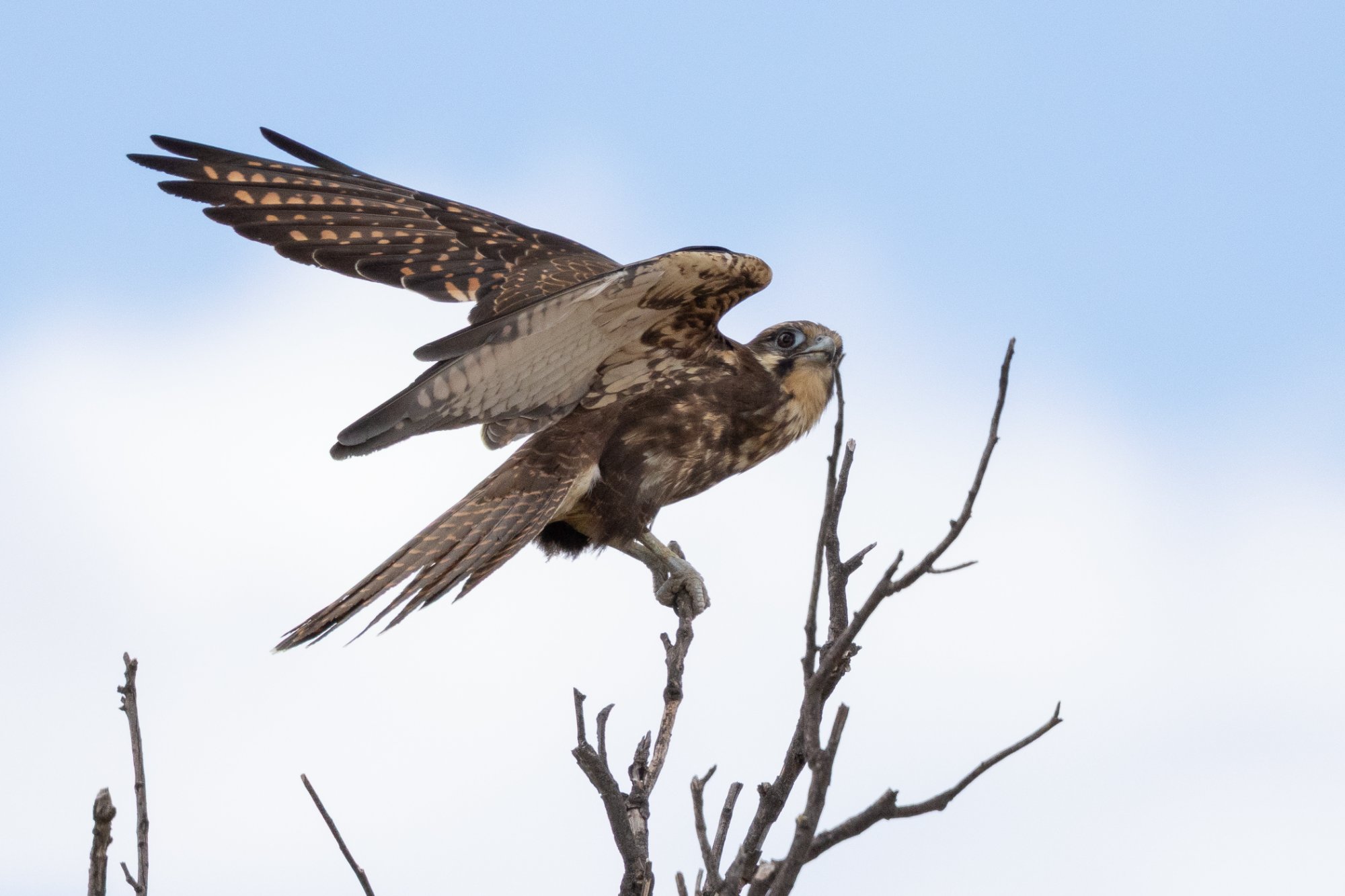
Brown Falcon launching, Tambo Country, Queensland New
Conversations With Raptors

Wedgie's Thermal

A Wedge-tailed Eagle reading the sky. The physics of soaring, the arithmetic of a territory, and one long day in the air above western Queensland.

Available Soon
See All Stories →
The Learning Pathway

From Story Reader to Shorebird Steward

Stories open an emotional door. The practitioner arm of this work — structured field training for Shorebird Stewards — is at forshorebirds.org. A Junior Steward Programme for schools and community groups is in development.

Conversations With Birds is created on the Country of the Quandamooka people, who have maintained their relationship with this land for more than 25,000 years. We acknowledge their custodianship and their ongoing connection to Country, waters, and sky.